

Your Questions, Answered
-
Vision
To walk as Y’shua walked, through the power of YHWH’s Ruach haKodesh.
Mission
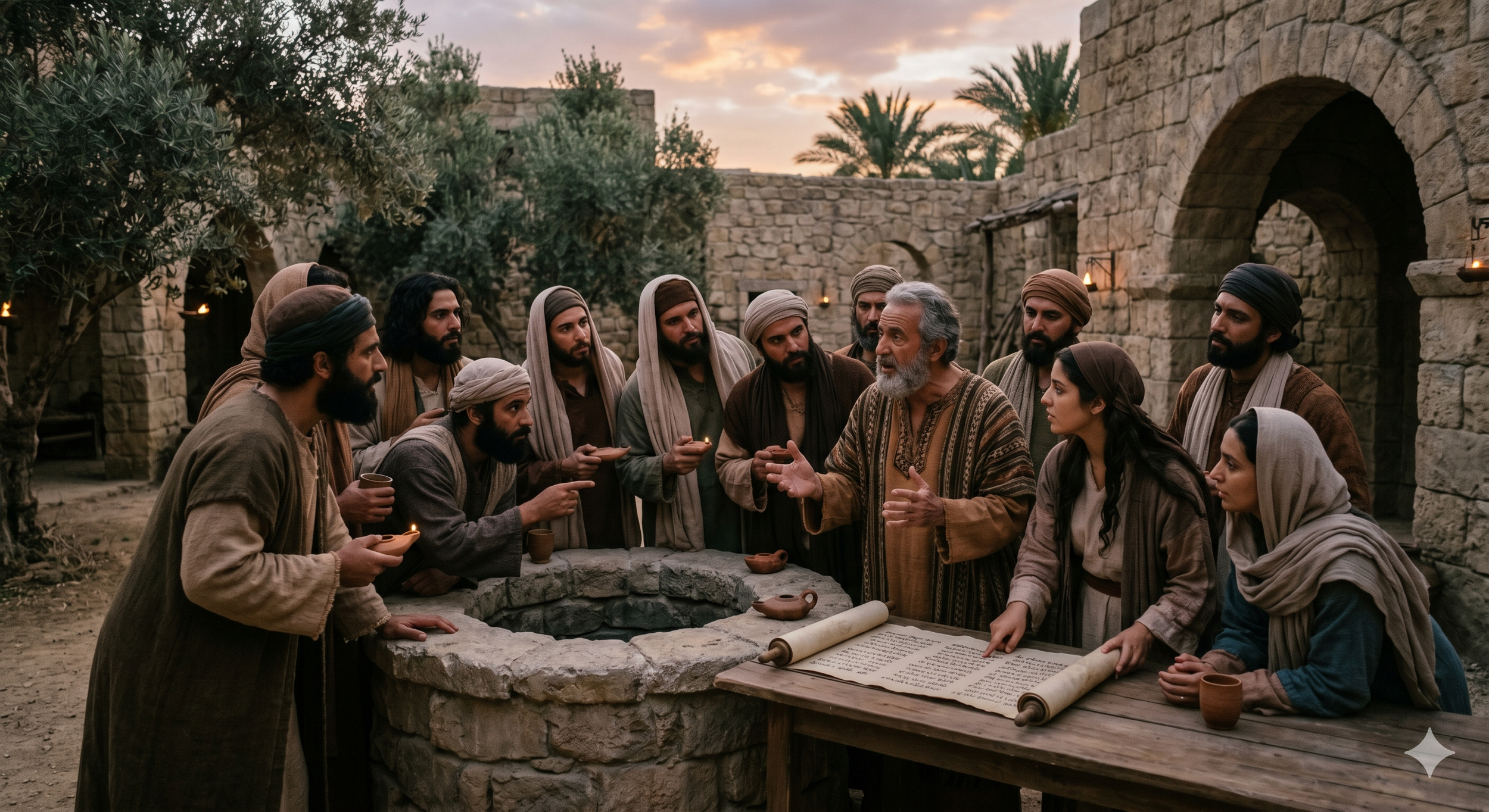
Following the example in Acts 2:42–47, we devote ourselves to the apostles’ teaching, fellowship, prayer, and breaking bread together. We seek to share generously, meet one another’s needs, gather with gladness and sincerity of heart, and praise Elohim together. We approach Him with reverence and expectancy, trusting Him to work through His Ruach haKodesh and to bring others into the fellowship.
Our scriptural foundation: Acts 2:42–47
Summary: The believers devoted themselves to the apostles’ teaching, fellowship, breaking bread, and prayer. They stood in awe as signs and wonders took place through the apostles, shared their possessions to meet needs, gathered in the temple and from house to house, and ate together with gladness and sincerity. They praised Elohim, enjoyed favor with the people, and the Master added to their number those being saved.
-
Our shared commitment is to keep the commandments of Elohim and hold firmly to the testimony and faith of Y’shua HaMashiach, seeking to reflect His character in our conduct.
Within that shared commitment, we recognize differences in understanding concerning pronunciation of the divine names, the biblical calendar, the biblical canon, and biblical cosmology. We discuss these matters seriously, examining Scripture and relevant evidence in context, without allowing disagreement itself to become a reason for division.
We seek to practice humility and peace in our relationships, as encouraged in Romans 12:16–18.
The Father’s and Son’s names
We do not require agreement on one pronunciation. In keeping with our Hebraic walk, we prefer Hebraic names and titles rather than anglicized forms. These include El, Eloah, and Elohim, and pronunciations of the divine name such as YaHWeH, YaHuWaH, or YeHoVaH. Some use HaShem, a designation meaning “the Name,” rather than a pronunciation. For His Son, members may use forms such as YaHshua, Yeshua, or YaHusha. We approach these differences with reverence and mutual respect.
The biblical calendar
Some have observed or still observe the Hillel calendar; others use the crescent moon and observations of barley in Israel, while others follow the Zadok Priestly Calendar. These differences should not become a cause of dissension in our gatherings. We encourage sharing the biblical and historical evidence for each understanding in context, allowing the Ruach to guide each person’s convictions in YaH’s timing.
The biblical canon
Many of us come from backgrounds where the 66-book Bible was the familiar collection of Scripture. We also study writings commonly described as Apocryphal, Deuterocanonical, or Pseudepigraphal, recognizing that these labels reflect different traditions and classifications. We examine their contents, textual witnesses, historical context, and relationship to other Scripture carefully. Differences in understanding their status need not prevent respectful study and fellowship.
Biblical cosmology
We recognize differing understandings of biblical cosmology. We encourage careful examination of Scripture in context, together with the observations and evidence offered for each view. Discussions should distinguish what the text explicitly states from our interpretations and assumptions, and should be conducted with humility and respect.
Growing together
We may also hold other strongly held interpretations from our previous walks. We seek to allow the Ruach haKodesh to transform and renew our minds with YaH’s truth, remembering the convictions that unite us.
We desire to understand our Father’s heart and the intent and purpose of His message. We welcome detailed discussion and the sharing of findings, conducted in love and with mercy toward those who reach a different conclusion.
-
Our Shabbat gatherings take place in members’ homes and ordinarily run from noon to 6:00 p.m. Please contact us before your first visit so we can arrange an introduction and confirm the host’s approval and gathering details.
Order of gathering
12:00 p.m. Meet and greet
12:30 p.m. Breaking bread: our communal meal
1:30 p.m. Praise, worship, thank offerings, Sh’ma, and a blessing over the children
2:30 p.m. Midrash for adults; Torah time and activities for children
5:30 p.m. Prayer requests
6:00 p.m. Close of the scheduled gathering
A few terms you may hear
Thank offerings are spoken thanksgiving to the Father: testimonies of His goodness, answered prayers, and what He has done in our lives since we last gathered. This is not a monetary collection.
Sh’ma is the declaration beginning “Hear, O Israel.”
Midrash is our group study and discussion of Scripture.
Torah time provides Scripture learning and activities for children.
Arrivals and children’s activities
Please let the host know if you expect to arrive after noon or leave before 6:00 p.m. Further fellowship afterward is welcome when the host is able to accommodate it.
Children are encouraged to participate in the activities arranged by the member leading that week. These take place during Midrash and may include Bible stories, Scripture-centered arts and crafts, and parent-approved videos.
-
We expect members to come prepared to contribute to the building up of the fellowship through a psalm, teaching, testimony, encouragement, or another contribution appropriate to the gathering.
Our guiding principle is that everything should build up the fellowship and be done in an orderly manner (1 Corinthians 14:26–40).
Praise and music
We are commanded to sing and make music (Psalms 95, 96, and 150).
Singing is a characteristic of the righteous (Proverbs 29:6).
Y’shua sang, and we seek to follow His example (Mark 14:26).
Hebrews 2:12 presents Messiah declaring the Father’s name and singing praise in the assembly.
We sing to Elohim (Psalm 104:33–34; 147:1, 5; Exodus 15).
We encourage one another through psalms, hymns, and spiritual songs (Ephesians 5:18–21; Colossians 3:16).
We declare His works with singing (Psalm 107:22; 89:1).
We sing new songs to Him (Psalm 96:1).
Thanksgiving: our thank offerings
We offer spoken thanksgiving to the Father by sharing testimonies of His goodness since we last met: prayers He has answered, ways He has provided, and what He has done in our lives. These thank offerings are expressions of gratitude, not a monetary collection.
We enter His gates with thanksgiving (Psalm 100:4).
We give thanks in all circumstances and remember others with gratitude in prayer (Ephesians 5:20; 1 Thessalonians 5:18; Ephesians 1:16).
We thank Him for His lovingkindness (Psalm 107:21–22).
We praise Him for His righteousness and righteous judgments (Psalm 7:17; 119:62).
We declare His wonders and make His deeds known (Psalm 26:7; 105:1).
We call upon His name (Psalm 116:17).
We bring our requests to Him with thanksgiving (Philippians 4:6).
We magnify and honor Him (Psalm 50:23; 69:30).
Study of Scripture
We study His Word together, examining what we hear and seeking to put His instruction into practice.
Passages that guide our study include:
2 Timothy 2:15; 3:14–15
Hebrews 4:12
Joshua 1:8–9
Revelation 1:3
Romans 15:4
Proverbs 3:1–2
Deuteronomy 11:18–23
Acts 17:11
Ezra 7:10
1 John 4:1
Matthew 4:4
Mark 7:13
-
These guidelines help regular members and newcomers prepare for our gatherings and show consideration for one another and our hosts.
Attendance and location
Please inform the host by Wednesday at the latest if you will not be able to attend that week’s Shabbat gathering. Regular attendees can find the host and location in our shared Google spreadsheet; reminders are sent through our WhatsApp group by Monday.
First-time visitors should contact us through the website so we can arrange an introduction and confirm the gathering details.
Time and weather
We begin at noon throughout the year, allowing time to eat, sing praises, give thanks, fellowship, and discuss His Word. As a group, we have agreed not to hold Shabbat gatherings outdoors when the temperature is below 60°F or above 89°F.
Respect for the host and worship
Please follow the hosting family’s house rules. Please finish eating before praise and worship begins and refrain from eating during that portion of the gathering. Food and snacks may be enjoyed during the longer study period, in accordance with the host’s house rules. We desire to give YHWH the reverence He deserves and to participate together without unnecessary distractions.
Children
Parents are responsible for guiding their children and setting an example during prayer, praise, and study. Please keep your children nearby or within your line of sight so you can guide them as needed.
Guests
Before someone new attends a gathering in a member’s home, we arrange an introduction outside the fellowship gathering. A visiting believer or family member already known to a regular attendee may attend with the hosting family’s prior approval. The inviting member should explain our guidelines, gathering schedule, and study format beforehand.
Biblically clean food
We follow the instructions concerning clean and unclean foods in Leviticus 11 and Deuteronomy 14. All food brought to share must use biblically clean ingredients. Please check the source of ingredients such as gelatin, enzymes, L-cysteine, flavorings, and mono- and diglycerides when their origin is unclear.
Illness
If you or a family member is sick or feeling sick, please refrain from attending so we can care for the health of the fellowship. Please let the group know so we can pray for you.
-
We believe modesty reflects a heart of humility, purity, and consideration for one another. As we gather to worship YHWH, study His Word, and enjoy fellowship, we desire to maintain an environment that honors Him in both our appearance and conduct.
Our gatherings are generally casual and relaxed. Jeans, khakis, modest shorts, skirts, dresses, T-shirts, blouses, and other comfortable clothing are welcome. We believe a relaxed setting encourages meaningful fellowship, learning, and genuine relationships.
What attire should we avoid?
We kindly ask everyone, both men and women, to exercise wisdom and discretion in their choice of clothing. While we do not maintain an exhaustive list of restrictions, we encourage avoiding:
Excessively revealing clothing: Very short shorts or skirts, low-cut or plunging necklines, crop tops exposing the midriff, or clothing that unnecessarily exposes intimate areas of the body.
Excessively tight or form-fitting clothing: Garments such as yoga pants, leggings, or similar clothing worn without sufficient coverage, particularly when they closely outline intimate areas.
Ripped or distressed clothing: Jeans or pants with large tears or openings that expose significant portions of the upper thighs, hips, backside, or undergarments. Minor distressing or small tears around the knees are generally not a concern.
Sheer or see-through clothing: Garments that reveal undergarments or intimate areas without appropriate lining or coverage.
Inappropriate messages or imagery: Clothing displaying vulgar language, sexually suggestive imagery, or messages inconsistent with a respectful fellowship environment.
What does Scripture teach?
Scripture encourages modesty, humility, self-control, and an emphasis on inward character rather than outward appearance.
1 Timothy 2:9–10 speaks of dressing modestly, with propriety and good works, reflecting a life of reverence toward Elohim.
1 Peter 3:3–4 reminds us that true beauty is not merely outward adornment but is found in the inward character of a gentle and quiet spirit.
Although these passages address women in their immediate contexts, we apply the principles of modesty, humility, and inward character to everyone in our fellowship.
Job 31:1 reminds us of our personal responsibility to guard our eyes:
“I made a covenant with mine eyes; why then should I think upon a maid?” — Job 31:1 (KJV)
Although Job spoke from a man’s perspective, the principle of guarding our eyes and cultivating purity of heart applies to everyone.
Our heart behind this guidance
These examples explain our fellowship’s expectations without creating an exhaustive dress code. Each person remains responsible for their own thoughts and conduct. We ask everyone to dress and act with humility, modesty, and consideration for others.
-
We do not collect tithes or monetary offerings, or receive and administer donations as a fellowship. We do not issue charitable donation receipts, and we have chosen not to register the fellowship as a nonprofit organization.
We do, however, share opportunities to give directly to ministries, orphans, widows, and people in need. We encourage giving freely and sincerely, without pressure or compulsion.
2 Corinthians 9:6–8
“Now I say this: the one who sows sparingly will also reap sparingly, and the one who sows generously will also reap generously. Each one must do just as he has decided in his heart, not reluctantly or under compulsion, for Elohim loves a cheerful giver. And Elohim is able to make all grace overflow to you, so that, always having all sufficiency in everything, you may have an abundance for every good deed.”
Matthew 6:3–4
“But when you give to the poor, do not let your left hand know what your right hand is doing, so that your charitable giving will be in secret; and your Father who sees what is done in secret will reward you.”